
During the 18th BRICS Summit in New Delhi, Chinese President Xi Jinping and Prime Minister Narendra Modi held a bilateral meeting, outlining a four-point approach for the steady and long-term development of China-India relations. The leaders stressed strategic understanding, win-win cooperation, mutual respect, and inclusive multilateral engagement, reaffirming their commitment to resolving the boundary question and addressing economic concerns. They also discussed global challenges and strengthening people-to-people ties.

National selectors are set to convene in New Delhi to finalise India's ODI and T20I squads for the upcoming home series against West Indies, with Rishabh Pant's potential white-ball return and Hardik Pandya's fitness being the primary discussion points.
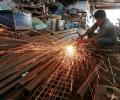
India's manufacturing sector activity reached a three-month high in May, with the HSBC India Manufacturing Purchasing Managers' Index (PMI) rising to 55.0, driven by robust domestic demand, infrastructure projects, and new business gains despite ongoing inflationary pressures.

Japanese 'flying car' manufacturer SkyDrive Inc plans to commercialise its eVTOL aircraft in India by 2028, initially focusing on medical logistics, particularly organ transportation. The company, backed by Suzuki, has signed an agreement with Air India and Suzuki for this purpose and is considering future manufacturing in India.

Heavy rainfall has severely impacted Uttar Pradesh, Jharkhand, and Uttarakhand, leading to casualties, widespread flooding, and significant disruptions. The Char Dham Yatra was suspended, flights were cancelled, and standing crops were damaged. Other regions like Himachal Pradesh, West Bengal, Rajasthan, and Delhi also experienced varied weather conditions, including snowfall and light rains.

India's foreign exchange reserves increased by USD 6.118 billion, reaching USD 682.354 billion for the week ending July 24, according to the Reserve Bank of India.

Mahindra & Mahindra's IT arm Mahindra Satyam plans to double its Middle East workforce in the next two years as part of a $24 million (87.8 million dirhams) global branding push, a senior company official has said.

Indian benchmark equity indices, Sensex and Nifty, rebounded nearly 1 per cent, with the Sensex jumping 790.54 points to 76,991.22, driven by softening crude oil prices and strong buying in banking, financial, and IT shares.

Discover the latest star-studded OTT releases this week, featuring Akshay Kumar's Welcome to the Jungle, Vijay's Jana Nayagan, and a diverse selection of regional and international films and series across major streaming platforms.

We are back to the 1971 moment with both China and the US supporting Pakistan, asserts Colonel Anil A Athale (retd).

Upcoming Mahindra Scorpio Lifestyler 2027: Expected Price & Features!

Yash's Toxic: A Fairy Tale For Grown-Ups has been postponed to June 4, due to the escalating Middle East conflict.

Lieutenant General Apti Alaudinov, deputy chief of the Russian Armed Forces' Main Military-Political Department, has warned that the escalating conflict in West Asia could lead to Israel ceasing to exist as a state, accusing Israel of seeking to widen the confrontation to involve the US and NATO.

India can play an important role in pushing ahead the peace process as it is an influential country due to the relations it has with the key players in the world.

India's foreign exchange reserves increased by USD 1.08 billion to USD 676.237 billion for the week ended July 17, primarily due to a significant rise in foreign currency assets, despite a drop in gold reserves.

Non-resident Indians are increasingly investing in luxury homes in India, driven by geopolitical uncertainties, particularly the Iran war. This trend is observed across major cities like Mumbai, Bengaluru, and the National Capital Region, with developers noting a significant rise in NRI pre-sales. While some see it as a temporary shift, others believe India is becoming a stable, long-term investment destination for NRIs, especially those from West Asia.
Rediff.com presents a slideshow on how people of the region are coping with the rare December snow.

The United States has launched a fresh wave of precision strikes, hitting approximately 90 Iranian military targets deep inside Iran, further intensifying a rapidly expanding regional conflict, with Tehran warning of severe retaliation.

S&P Global Ratings has increased India's GDP growth forecast for the next fiscal year to 7.1 per cent, citing private consumption, investment, and exports as key drivers. However, the agency also cautioned that the conflict in the Middle East could strain India's fiscal position due to higher energy prices.
Police sources said the bomber, belonging to the Aqsa Martyrs' Brigade that claimed responsibility for the attack, blew himself up in a line of people going through a customary security check at the mall's entrance.

Sagiv Steinberg, CEO of the Jerusalem Center for Security and Foreign Affairs (JCFA), described the recent US-Iran peace agreement as a temporary 60-day ceasefire, not a genuine peace deal, suggesting it's timed for the upcoming US midterm elections.

Dozens of US planes carrying ammunition landed in Tel Aviv, raising concerns about potential strikes on Iran. Negotiations between the US and Iran remain deadlocked over key issues, with both sides issuing fresh demands and warnings.

Amritpal Singh Mehron, the main suspect in the murder of social media influencer Kanchan Kumari, has been arrested after being deported to India from the Middle East.
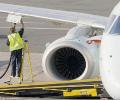
GMR Aero Technic has signed a license agreement with Honeywell Aerospace to provide maintenance, repair, and overhaul (MRO) services for LEAP engine line replaceable units (LRUs). This partnership will enhance MRO capabilities for Airbus A320neo and Boeing 737 MAX aircraft in India, leveraging Honeywell's technology and GMR's infrastructure to offer efficient and cost-effective solutions for regional airlines.

Ishan Kishan, after scoring an epic 270 in the Duleep Trophy final, revealed that freeing his mind from overthinking and expectations has been crucial to his recent success. He emphasised focusing solely on scoring runs and winning matches, a change that came after a turbulent phase in his career, including losing his BCCI central contract. Kishan highlighted the importance of domestic cricket for reflection and growth, enabling him to return stronger.

South Zone booked their place in the Duleep Trophy final with a dominant seven-wicket win over North Zone in Bengaluru on Wednesday, wrapping up the chase with plenty of time to spare.

India has expressed firm opposition to attacks on merchant shipping amidst the ongoing Iran conflict, revealing that several Indian nationals have died or are missing due to these incidents. The nation also called for restraint, de-escalation, and prioritising civilian safety in the region.

A new report suggests that prolonged conflict in the Middle East could significantly impact India's GDP growth and inflation.

Indian benchmark indices, Sensex and Nifty, experienced declines in early trade due to a significant surge in crude oil prices, exacerbated by escalating tensions in the West Asia. Track how Sensex, Nifty fared on July 23.

US Secretary of State Marco Rubio met with Pakistan's Foreign Minister Ishaq Dar amid American demand that countries mediating the peace talks with Iran join the Abraham Accords and establish diplomatic and economic ties with Israel.
Just days ahead of a looming diplomatic showdown between Palestine and Israel, United Nations Secretary General Ban Ki-Moon on Wednesday stressed on a new international effort to break the Middle East "stalemate".
Bharat Sanchar Nigam Ltd will reduce ISD (international subscriber dialling) tariffs for Sri Lanka by 40 per cent and to Middle East countries by 20 per cent from October 1.

Sonia Gandhi criticised PM Modi's Israel visit, calling it a "bewildering strategic decision" amid the regional conflict.
Following the roadshows by the government, the Arabs are coming to Kerala for the treatment of lifestyle diseases.

Reliance Industries' digital arm, Jio Platforms, may see its initial public offering (IPO) delayed to the second half of fiscal 2027, according to CreditSights. The delay is primarily attributed to ongoing geopolitical tensions in the Middle East, which could impact market conditions and investor sentiment.

Mumbaikars are set to face a significant financial burden as the prices of milk, CNG, and taxi-rickshaw fares have all seen a substantial increase from September 1, 2026, impacting household budgets ahead of the crucial festive season.

Donald Trump expressed optimism about securing an agreement with Tehran to prolong a truce and restore transit through a strategic maritime chokepoint within the next week, even as he criticised political opponents and the media for what he described as their tendency to distort outcomes, even in a hypothetical scenario of complete Iranian military surrender.

From timeless classics to modern favourites, these 10 Malayalam songs capture the colour, warmth and togetherness of Onam like few others can.
